Sculpture/Mixed Media

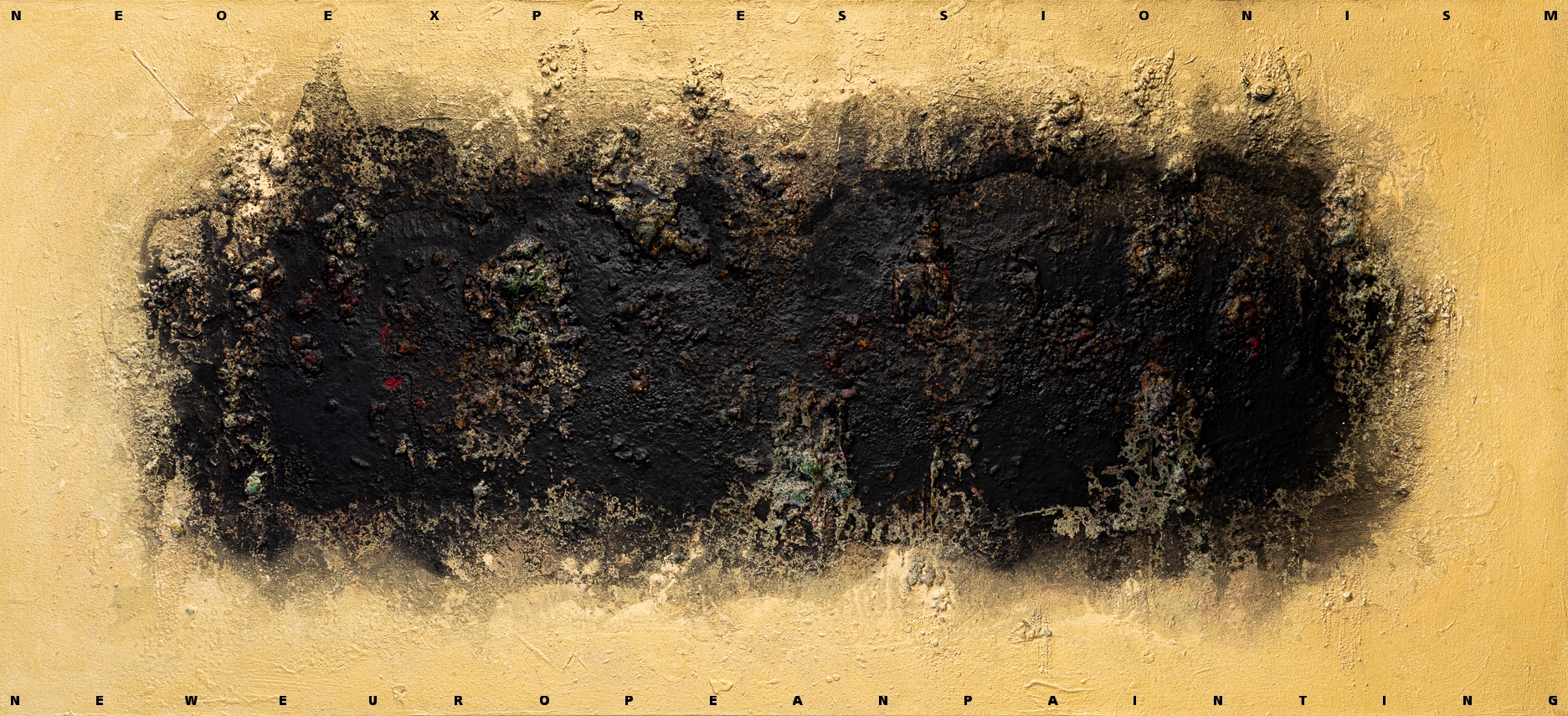
Nigredo
Standing before the works of Yuri Elperin, one feels as though standing amid a relic constructed jointly by history and time, culture and spirit. The layers of paper, wood, metal, fabric, and pigment are not merely a convergence of materials, but a condensation of memory and history. His art releases form from the constraints of the material world, transforming it into a manifestation of spiritual resonance. As the philosopher Hans-Georg Gadamer observed, human understanding itself is a historical mode of existence. Therefore, an artwork does not passively present the past; it continually generates new meaning within the process of Wirkungsgeschichte—the “effective history” through which understanding unfolds. Elperin’s creative practice embodies this very process: an existential experience articulated through matter as language and time as medium.

Wu Zetian

Transmigration of Dragon
Many of his pieces draw upon religious and mythological imagery—The Eye of Buddha, Wu Zetian’s Dream, The Transmigration of the Dragon, and The Beginning of the Endless Knot. These works do not simply retell tradition; they allow tradition to speak anew within contemporary cultural contexts.
This process of “speaking anew” is the concrete manifestation of effective history within art. The meaning of a work is never fixed; it is continuously rewritten through the viewer’s perception and the transformation of cultural context. When facing The Eye of Buddha with its silent gaze, or Something Is Nothing and Nothing Is Something with its paradoxical structure, the understanding that occurs is not a restoration of the artist’s intention but a new historical encounter. Both artist and viewer exist within the continuum of history, together forming the work’s living history. Elperin’s art, therefore, is not a nostalgic return to history but a way of letting history remain effective—a spiritual manifestation propelled by time itself.

Lilith

Metal Element
Elperin’s Five Elements series of metal, wood, water, fire, and earth, cease to be mere natural symbols; they become artistic metaphors of cosmic order. The hardness and luster of metal suggest the endurance of form; the texture and vitality of wood express growth; the interplay of water and fire evokes tension and regeneration; and the heaviness of earth anchors the composition with ontological gravity. This reconfiguration of the Five Elements is a fusion of horizons between cultural perspectives. In viewing these works, one perceives not only the meeting of cultures but also the emergence of meaning itself—a visual enactment of hermeneutic fusion.
In Elperin’s art, this fusion operates not only at the thematic level but also through material processes. Metal welding, wooden collage, photographic fragments, and layered pigments are woven together so that the medium itself becomes a metaphor for cultural dialogue. Understanding, therefore, is not the restoration of the past but the creation of new meaning through the encounter of horizons.

Write These Words…
The viewer, facing the work, is drawn into a silent dialogue—not with the artist, but with existence itself. Each act of seeing becomes an event of understanding, and this understanding is not external to us but constitutive of our being. Through this, Elperin completes a passage from the material world to the spiritual: art ceases to be an image about the world and becomes the world’s own manifestation.
Yuri Elperin’s art is a form of effective history shaped by time, culture, and spirit. Interweaving Eastern systems of belief with Western formal languages, he creates a new visual order in which the work itself becomes an event of self-understanding. Within these sculptural/painting hybrids filled with material tension, existence, memory, and transcendence are not separate themes but parts of a continuous cycle—a process through which the human spirit reveals itself in history. In Elperin’s artistic world, form is memory, form is history, and in the luminous moment of art, one perceives the resonance of eternal transcendence and the human spirit.